
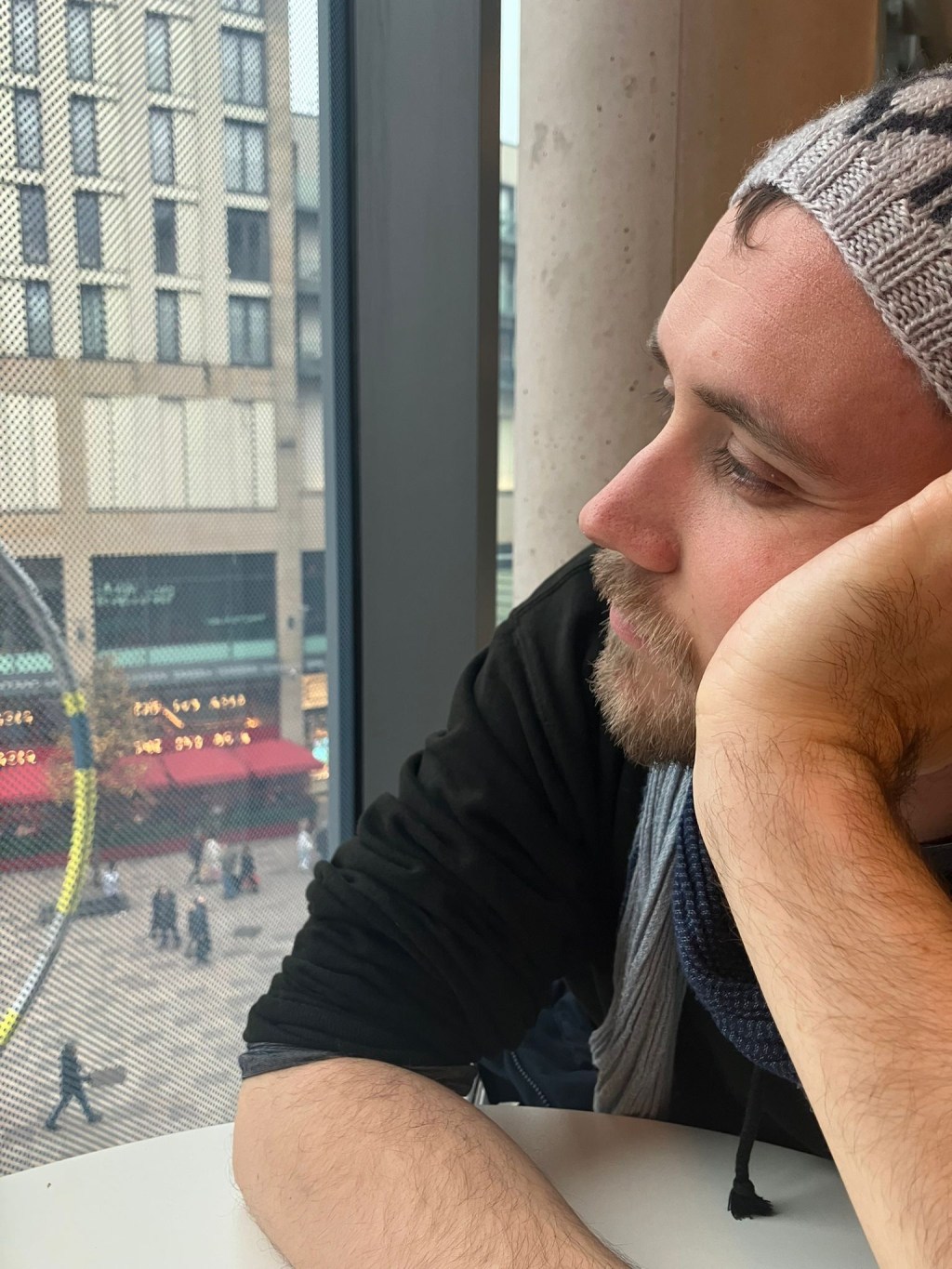
I sat in a coffee shop this morning and couldn’t focus. This isn’t the first time it has happened. I whipped out my journal and decided to try to figure out why I couldn’t focus by starting a conversation with my attention.
This is a therapeutic journalling technique – starting a dialogue with someone or something to help gain a deeper understanding about how you feel. I learnt this technique from a book titled Journal To The Self by Kathleen Adams. In the book, Adams suggests examples such as having a conversation with your body if you are feeling unwell, or talking to your mental block if you are struggling to complete a project.
The dialogue could also be with someone who exists, living or dead. You could talk, for example, to an artist who particularly inspires you.
You can give your conversation partner a character or persona if they don’t have one already – I decided to make my attention take the form of a hamster, and it turned out to be a surprisingly judgemental one.
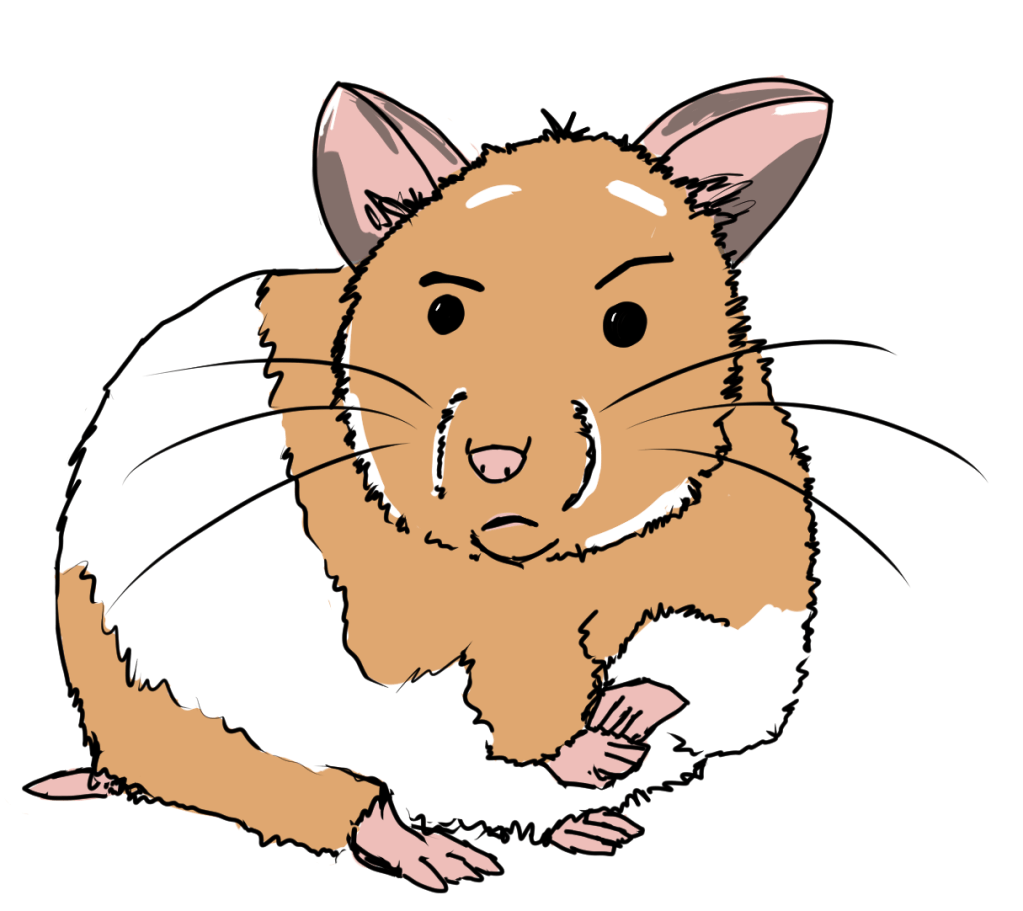
My conversation with Attention
Me: Hey Attention, I keep getting distracted. Why is that?
Attention: I’m moving, it’s not my fault you can’t keep up. There’s just so much to see.
Me: I don’t need to see everything. I just want to focus on one thing.
A: One thing is boring. Plus, you do one thing at a time.
M: For like ten seconds.
A: Then onto the next thing!
M: That’s not long enough!
A: Well, what do you want to focus on now? You brought five different things to this coffee shop – surely if you only wanted to focus on one thing, you would have only brought one thing.
M: I guess you’re right…
A: You surround yourself with things. Books, notebooks, your journal, games, your phone, and then you blame me when you cycle through them all.
M: You’re right again.
A: Have you thought that maybe you should be chatting with Intention and not Attention? What was your intention when you sat down today?
M: To work on my children’s novel – but then a friend messaged me.
A: And we swapped to that, because we felt it needed answering right away.
M: Yes, it was important. They needed support.
A: And after you finished messaging them, you went back to work, right?
M: …No.
A: What did you do?
M: I messaged my wife. I asked her… if eyeliner would make me look ‘sexy or super sexy’…
A: Right, so I shifted again from the friend message to this message. She did say ‘very sexy’ though, which was nice.
M: Yes, that was nice.
A: So that’s three things and then…
M:… and then I played a game on my phone, in between reading pages of the book I brought with me.
A: Have you noticed a link between these distractions?
M: My phone.
A: And where is that phone now?
M: On the table next to me.
A: And you’re thinking about picking it up now, aren’t you?
M: Maybe.
A: You want to check it?
M:…yes.
A: You see the problem? It’s not me at all!
M: I see.
A: What are you going to do about it?
M: I’m going to put my phone in my backpack where I cannot see it.
A: That’s a start.
M: Alright, Attention, I’m sorry I blamed you.
A: No problem. Let’s just try to stick to one thing in the future… and I agree, you would look great in eyeliner.
M: I would, wouldn’t I?
This fun little dialogue might have been made up on the spot, but it helped me to realise how much I had been fiddling with my phone. That little distraction rectangle had taken up all the time I had set aside for writing that morning. It also helped me realise that I need to work harder on my intentions. I need to make sure I stick to the task at hand. Maybe setting a timer, or giving myself some kind of deadline would help with this.
And hey, next time I talk to Attention the Hamster maybe it will be on friendlier terms.






 Rhi Axtell - Writer
Leave a comment